This post contains affiliate links. If you buy through them, Grind In Silence may earn a small commission at no extra cost to you. We only recommend tools we’d put our own name behind.
Table of Contents
You were doing so well. Two weeks straight. The workouts, the writing, the early mornings — all of it clicking. Then life did what life does: a brutal week at work, a bad night, a problem you didn’t see coming. You missed one day. Then two. And now the streak is a memory and you’re standing in the familiar rubble, wondering what’s wrong with you.
Nothing is wrong with you. You’ve just been sold a lie about how to stay consistent — the lie that it’s a willpower problem, that you simply need to want it more. The truth is quieter and far more useful: consistency isn’t about intensity. It’s about building something small enough to survive the days you have nothing left to give.
This is the realistic guide — no 4 a.m. fantasies, no “just discipline yourself.” We’ll break down why consistency actually breaks, the real difference between burnout and laziness, why motivation was never the engine, and the small-wins system that rebuilds momentum after life knocks you flat. Then a 7-day reset, and exactly what to do after you miss a day.

The Real Reason Consistency Breaks
Here’s the uncomfortable truth: most consistency doesn’t die from a lack of effort. It dies from a bar set too high. You design your habit for your best self — the rested, motivated, nothing-going-wrong version — and then a normal hard week arrives and that version is nowhere to be found. The standard you built can’t bend, so it breaks.
Then the second domino falls: all-or-nothing thinking. You miss the full hour at the gym, so you skip entirely. You can’t write the perfect 1,000 words, so you write zero. One imperfect day gets recoded as failure, and failure feels like permission to stop. The streak didn’t end because you’re weak. It ended because your system had no version of “good enough for a bad day.”
This is also why the people who look effortlessly disciplined aren’t gritting their teeth harder than you. They’ve simply lowered the bar to something that survives reality. Real consistency habits aren’t heroic. They’re small, boring, and almost impossible to fail — which is exactly the point.
You don’t break your streak on the hard days. You break it on the day you decide a small effort isn’t worth making.
Burnout vs Laziness
Before you call yourself lazy again, get the diagnosis right — because the two look identical from the outside and need opposite cures. Laziness is the absence of motivation when your tank is actually full; rest doesn’t fix it, action does. Burnout is the absence of capacity when your tank is empty; pushing harder only digs the hole deeper.
Most people who “can’t stay consistent” aren’t lazy — they’re quietly burned out and treating it like a character flaw. They respond to exhaustion by demanding more discipline, which is like flooring the gas with an empty tank. If you’re dreading things you used to enjoy, sleeping badly, irritable, and running on fumes, that’s not a willpower deficit. That’s a signal to recover, not to grind.
The honest move is to tell the difference each day. On an empty-tank day, the disciplined choice is the smaller action plus real rest. On a full-tank day, the disciplined choice is to start before you feel ready. Knowing which day you’re in is half of staying disciplined over the long haul.
Why Motivation Fails
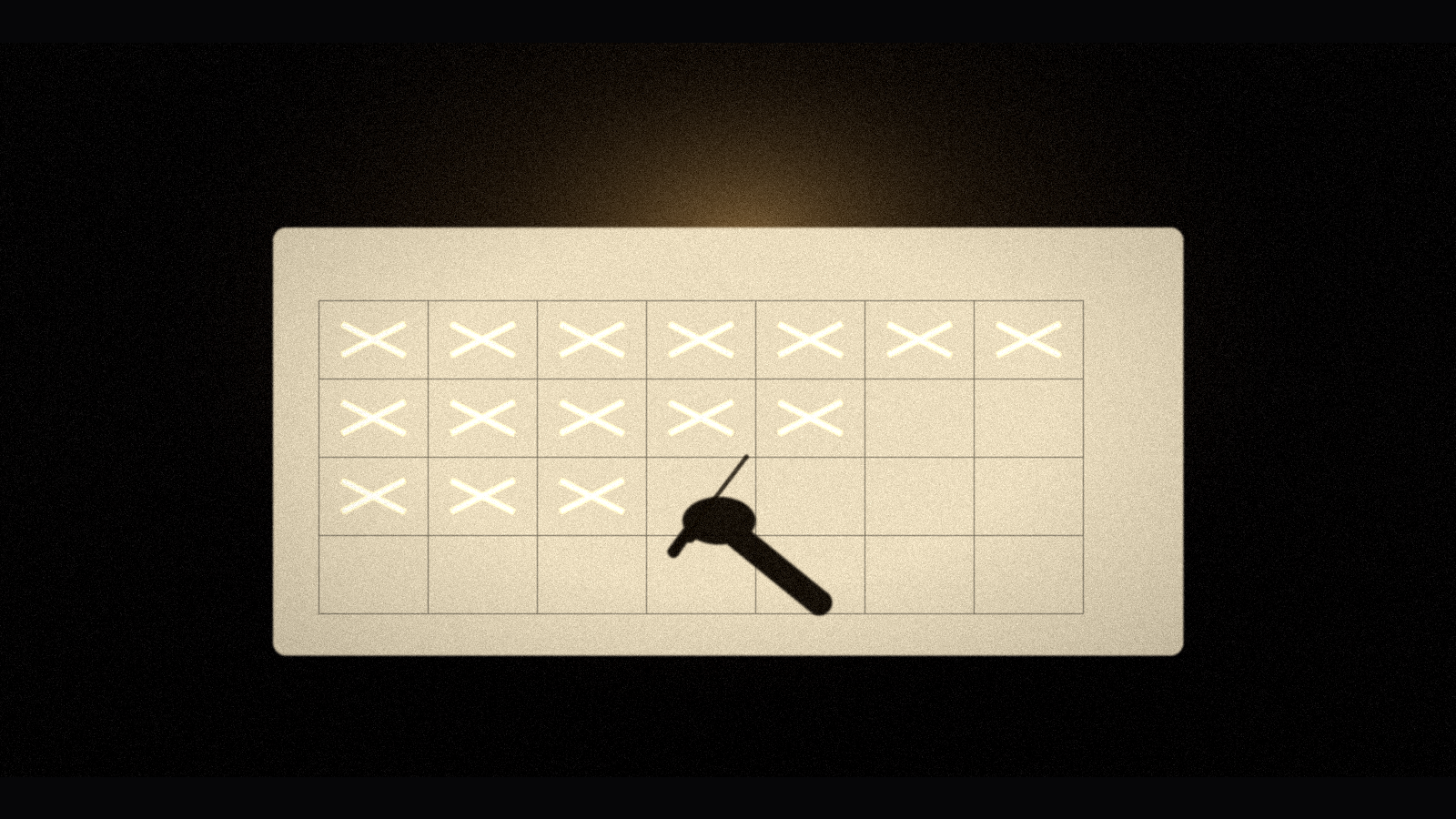
Motivation feels like the engine, but it’s really just the spark — and sparks go out. It’s an emotion, and emotions are weather: they roll in big, feel permanent, and leave. If your habit only runs when motivation is present, your habit is at the mercy of your mood. That’s a coin-flip, not a system.
There’s a chemical version too. Novelty spikes dopamine — the new plan, the new app, the fresh start — and you mistake that spike for commitment. The brain adapts, the spike flattens, and around day ten the behavior that was coasting on excitement suddenly has no fuel. This is the cliff almost everyone falls off, right when “easy” turns into “effort.”
The replacement isn’t more motivation — it’s reducing how much you need. Discipline when tired doesn’t come from a fiery inner monologue; it comes from a system so frictionless that showing up barely requires a decision. Same time, same place, same tiny action. You stop relying on feeling like it, because the system carries you when the feeling is gone.
Atomic Habits — James Clear
If you want the deepest, most practical system ever written on small habits and identity, Atomic Habits is it. Nearly every principle in this article traces back to it — the two-minute rule, never miss twice, environment design. The one book we hand anyone trying to stay consistent.
Get Atomic Habits →The Power of Small Wins
If motivation can’t carry you, what does? Evidence. Every time you do the tiny version of the habit, you cast a vote for a new self-image: I’m someone who shows up. That’s the quiet engine of consistency — not a feeling, but a stack of small wins that slowly rewrite who you believe you are. (It’s the same identity shift behind why people keep starting over — and how they finally stop.)
Small wins work because they’re winnable on your worst day. Two push-ups. One sentence. A made bed. They sound too small to matter, and that disbelief is precisely why they work — there’s no excuse big enough to skip them. And once you’re in motion, you usually do more. The two push-ups become ten. The job was never the ten; it was breaking the inertia of zero.
There’s a momentum effect too. A completed small action releases a hit of progress that makes the next one easier, and a chain of easy wins compounds into identity. Miss the win and the opposite happens — zero days breed more zero days. So you protect the small win like it’s the whole thing, because in the math of consistency, it is.

How To Build Momentum Again
Momentum isn’t found, it’s manufactured — and always from a near-zero start. When you’ve fallen off, the instinct is to come back with a heroic comeback week to “make up for it.” Don’t. That spike is the same trap that broke you before. The way back in is humiliatingly small on purpose.
Here’s how to build momentum from a dead stop:
- Pick one keystone habit. Not five. One small action that makes you feel like yourself again — a walk, ten minutes of writing, one workout set.
- Shrink it past the point of failure. Make it so small that doing it feels almost silly. The goal this week is reps, not results.
- Anchor it to a fixed cue. Same time, same trigger (“after coffee,” “before shower”). Remove the decision and you remove the resistance.
- Cut the friction the night before. Clothes out, page open, app ready. Make tomorrow’s version inevitable while tonight-you still has energy.
- Track the chain. Mark each day you show up — the same quiet, repeatable discipline behind keeping up a side hustle after work. The growing streak becomes its own reason not to break it.
Do this and momentum returns faster than you’d think — usually within a week. Not because you found a burst of willpower, but because you stopped waiting for one.
The 7-Day Consistency Reset System
When you’re stuck, you don’t need a 90-day overhaul — you need seven days to prove to yourself you can still show up. Here’s the reset, built for hard weeks and low energy.
- Day 1 — Choose one. Pick a single keystone habit and write its two-minute version on paper. One habit, absurdly small.
- Day 2 — Set the cue. Attach it to a fixed daily anchor and prep the night before. Decide when and where, not just “today.”
- Day 3 — Show up tired. Do the two-minute version even though you’re not feeling it. Today you’re proving the system works on a bad day.
- Day 4 — Record the win. Mark the chain and write one line: “I showed up.” You’re collecting evidence, not chasing perfection.
- Day 5 — Let it grow (optional). If energy’s there, do more than the minimum — but the minimum still counts as a full win.
- Day 6 — Survive the dip. Motivation fades around now. Hold the minimum. This is the day most resets quietly die; you keep it alive.
- Day 7 — Review and recommit. Look at seven marks on the chain. Keep the habit, shrink it, or swap it — then run another seven. Consistency is just repeated weeks.
What To Do After Missing A Day
You will miss a day. Life guarantees it, and a missed day is not the problem — what you do next is. The whole game of consistency is decided in the 24 hours after a slip, by one rule: never miss twice.
One missed day is an accident. Two in a row is the beginning of a new identity — “someone who quit.” So you don’t punish yourself, and you don’t try to “make up” for the miss with a double session (that’s all-or-nothing thinking wearing a productive mask). You simply do the smallest version of the habit at the very next opportunity. Return at the minimum, not the maximum.
And drop the guilt entirely — it’s not fuel, it’s friction. Shame makes the next rep heavier, not lighter. Missing a day doesn’t erase three weeks of work; quitting does. Treat the slip as one data point, get the next rep in, and the streak quietly continues. That, more than any motivation, is the real answer to how to stay consistent when life is hard.

The Consistency Reset System
A printable PDF: the keystone-habit picker, your two-minute minimum, a 7-day reset checklist, the never-miss-twice rule, and a 30-day chain tracker. Everything you need to get consistent again — starting today.
Send Me the Reset System →Consistency Is Just Showing Up Smaller Than Your Excuses
You were never failing because you lacked discipline. You were failing because the bar was built for a person who doesn’t exist on hard days. Lower it. Make the habit so small that a tired, stressed, overwhelmed version of you can still clear it — and then let those small wins quietly stack into the kind of person who simply doesn’t stop.
And this is exactly how money gets built too: the same small-wins system rebuilds your finances — one automatic transfer, one tracked expense, one no-spend day, stacked quietly with a simple budget until “broke” stops being your default. Discipline compounds in every direction once you make it small enough to keep.
Pick one habit. Shrink it. Anchor it. Show up tomorrow at the minimum, even if it’s two minutes. Don’t broadcast it — grind in silence and let the chain do the talking.
Get the System on Paper
Grab the free Consistency Reset System and pair it with Atomic Habits — the checklist plus the deep system behind it. The fastest way to turn “I keep falling off” into a streak you trust.
Download the Reset SystemGet Atomic HabitsRecommended Reading
Three books, in order, if you’re serious about consistency and deep, disciplined work.
Atomic Habits
The definitive system for small habits, identity, and never missing twice. Start here — it’s the backbone of everything above.
View on Amazon →Deep Work
For when showing up isn’t enough and you need focused, high-quality output. The discipline of doing fewer things, deeper.
View on Amazon →The War of Art
The best book on Resistance — the inner force that makes you quit. Read this to understand the enemy you’re fighting on the hard days.
View on Amazon →Frequently Asked Questions
How do I stay consistent when life is hard?
Shrink the habit until it survives your worst day, anchor it to a fixed time, and protect a two-minute minimum so the streak never hits zero. Consistency is built by lowering the bar enough that a tired, stressed version of you can still clear it — not by trying harder.
Why do I keep losing consistency?
Usually because the bar was set for your best self, not your real one. When life gets hard, an all-or-nothing standard turns one missed day into a full collapse. The fix is a smaller, repeatable minimum and a rule that you never miss twice in a row.
How do I stay disciplined when I’m tired?
Discipline when tired comes from systems, not willpower. Reduce the decision (same time, same place), shrink the action to two minutes, and remove friction the night before. You act from the system you built, not the energy you feel.
What should I do after missing a day?
Skip the guilt and apply one rule: never miss twice. One missed day is an accident; two is the start of a new pattern. Don’t try to make up for it — just do the smallest version of the habit at the next scheduled time.
Turn this into action
Goals only work with a system behind them. APEX Life OS is the Notion template I use to turn goals into weekly action that actually sticks.

About Felix Guzman
Felix Guzman is a personal finance writer and the founder of Grind In Silence. He writes about money mindset, wealth building, and escaping the paycheck-to-paycheck cycle — with no fluff and no get-rich-quick promises. His mission: help everyday people build real, lasting wealth by making smarter financial decisions every day.